

 Image 1 of 5
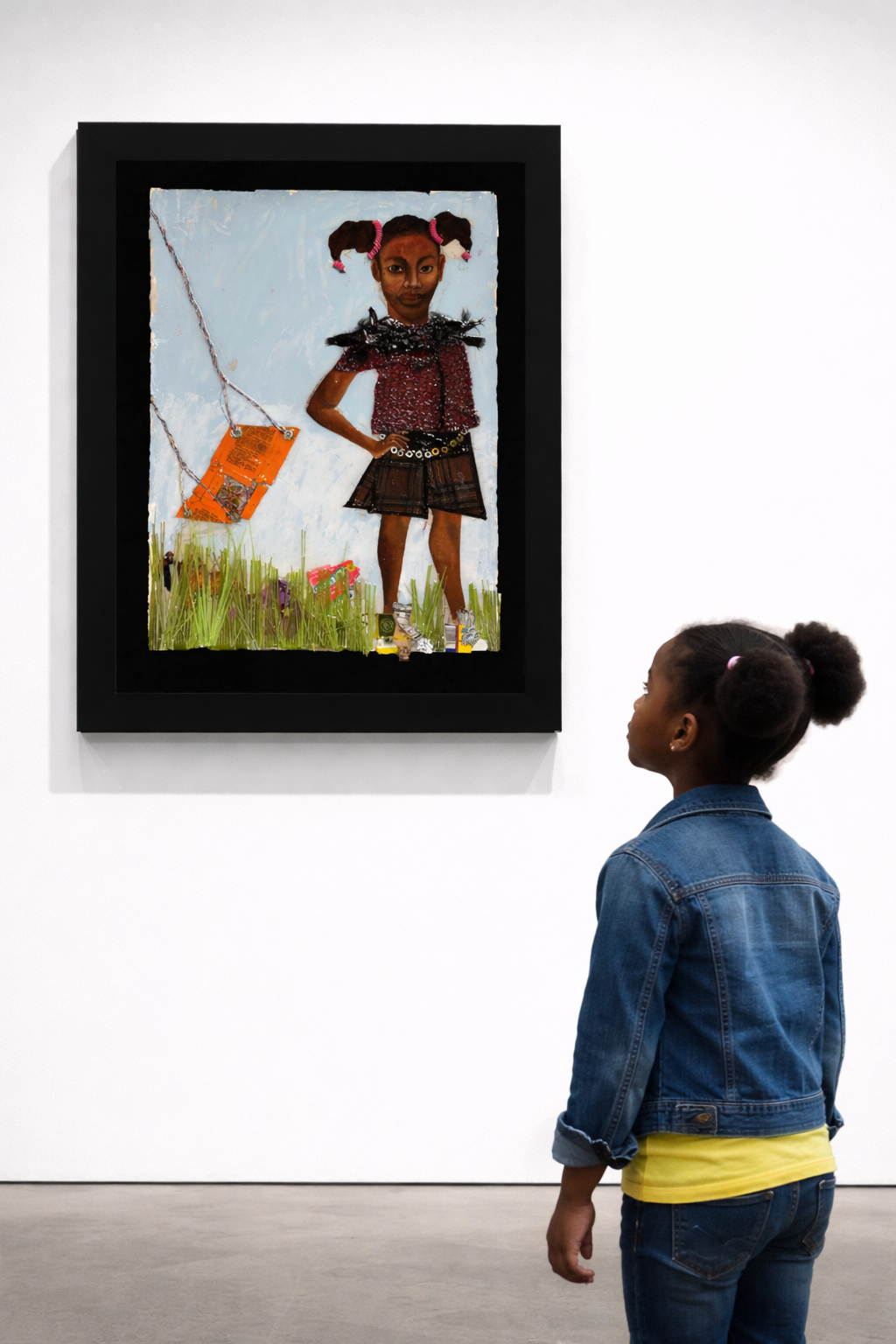 Image 2 of 5
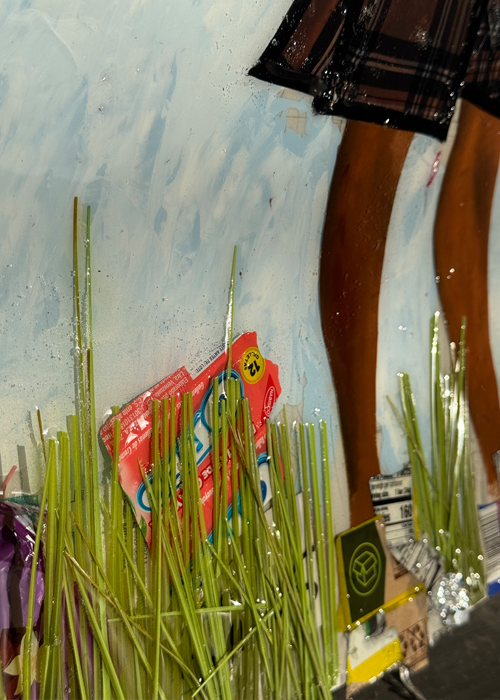 Image 3 of 5
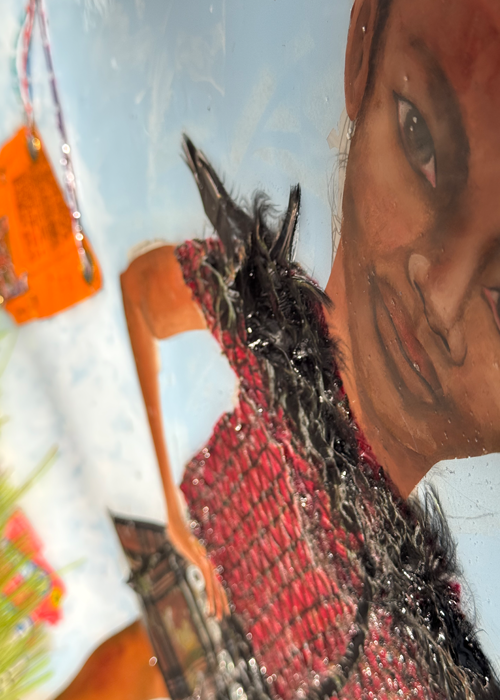 Image 4 of 5
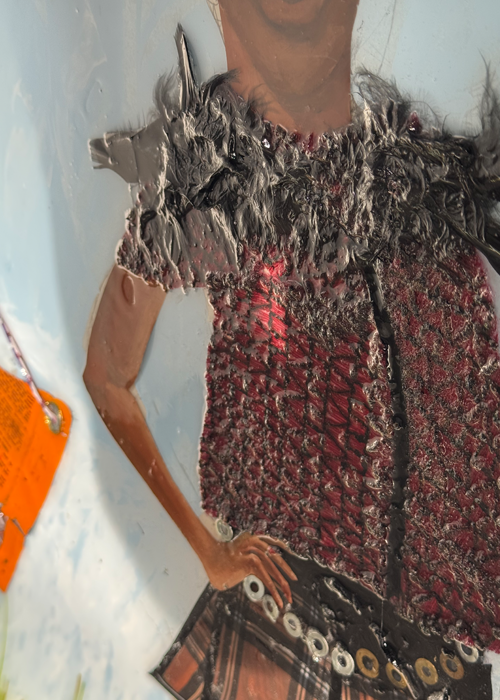 Image 5 of 5
From the series: Proof of Purchase
Mixed media with found packaging, hardware, thread, and resin
26 × 32 inches
2026
Description:
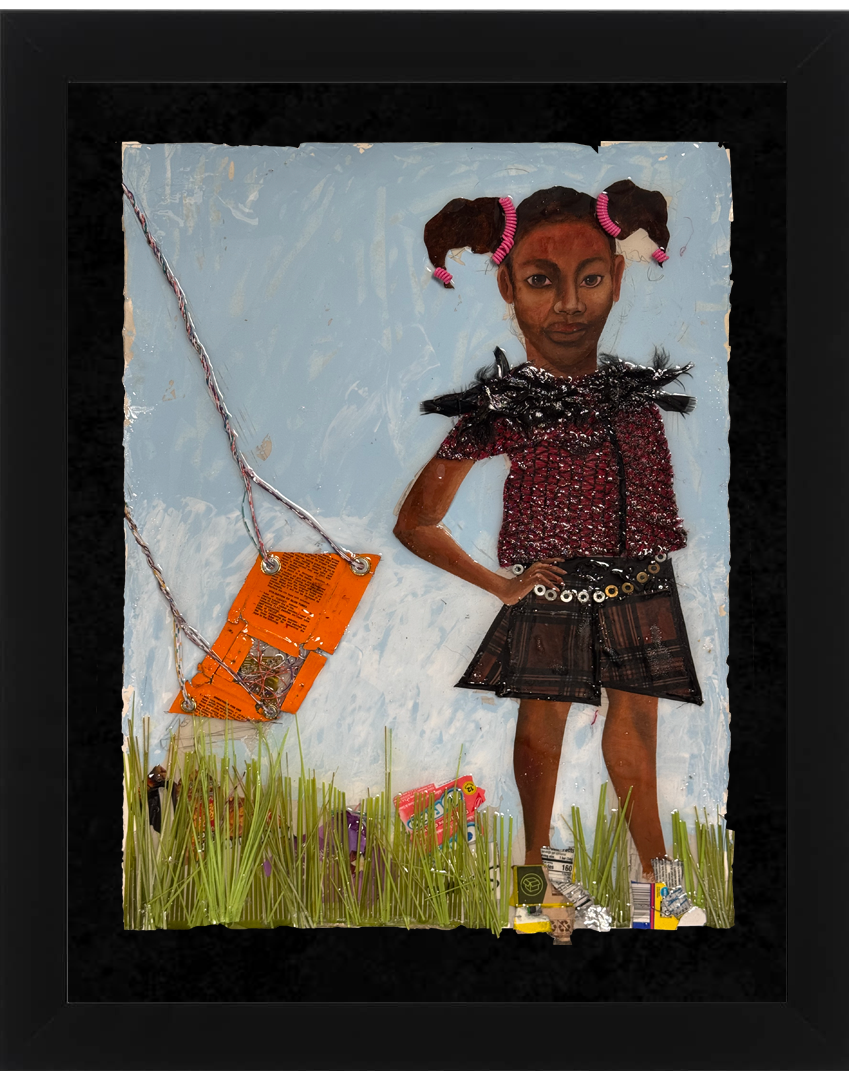
In Conditioned Acceptance, Constantine turns from visible intervention to internal adaptation. The work reflects on the moment when systems of consumption and normalization no longer require force. When they become environment.
The subject stands upon embedded debris, fragments of a world inherited rather than chosen. Above, a swing constructed from circuit board and hardwire replaces the traditional site of play. The gesture is subtle but deliberate: recreation has shifted from physical space to digital interface. Childhood itself becomes mediated through screens.
Unlike the stitched figures of the Status trilogy, there are no visible acts of correction here. Instead, the body appears calibrated, adjusted to circumstance. The materials surrounding the figure do not shock; they blend into the landscape. What was once disruption becomes condition.
Encased in resin, the composition preserves this quiet accommodation. The work does not accuse. It asks the viewer to consider how much of contemporary life has been absorbed as normal and whether recognition is the first step toward change.
From the series: Proof of Purchase
Mixed media with found packaging, hardware, thread, and resin
26 × 32 inches
2026
Description:
In Conditioned Acceptance, Constantine turns from visible intervention to internal adaptation. The work reflects on the moment when systems of consumption and normalization no longer require force. When they become environment.
The subject stands upon embedded debris, fragments of a world inherited rather than chosen. Above, a swing constructed from circuit board and hardwire replaces the traditional site of play. The gesture is subtle but deliberate: recreation has shifted from physical space to digital interface. Childhood itself becomes mediated through screens.
Unlike the stitched figures of the Status trilogy, there are no visible acts of correction here. Instead, the body appears calibrated, adjusted to circumstance. The materials surrounding the figure do not shock; they blend into the landscape. What was once disruption becomes condition.
Encased in resin, the composition preserves this quiet accommodation. The work does not accuse. It asks the viewer to consider how much of contemporary life has been absorbed as normal and whether recognition is the first step toward change.