From the series: Proof of Purchase
Mixed media with found packaging, hardware, thread, and resin
26 × 32 inches
2026
Description:
The Patron Saint of Processed Goods positions consumer culture as contemporary ritual. Drawing from the visual language of devotional iconography, the portrait presents its subject with a halo constructed from circuitry, a crown of technological dependence that sanctifies systems of production and consumption.
The garment, assembled from discarded food packaging and commercial materials, transforms nourishment into ornament. Everyday waste becomes regalia. The body is both vessel and altar, adorned with the residue of processed goods that define modern survival.
At the center, an anatomical heart is pierced and exposed, suggesting both sacrifice and devotion. The gesture recalls martyr imagery while reframing consumption as a shared act of worship. The saint is not divine but complicit, preserved within the very systems that sustain and exploit.
Encased in resin, the surface becomes permanent. Ephemerality is suspended. What was designed to be disposable is sealed and elevated. The work asks whether contemporary faith has shifted from spiritual salvation to material acquisition and what remains when desire becomes doctrine.
As the opening work in Proof of Purchase, this piece establishes the series’ central inquiry: how consumption functions not merely as habit, but as belief.
From the series: Proof of Purchase
Mixed media with found packaging, hardware, thread, and resin
26 × 32 inches
2026
Description:
The Patron Saint of Processed Goods positions consumer culture as contemporary ritual. Drawing from the visual language of devotional iconography, the portrait presents its subject with a halo constructed from circuitry, a crown of technological dependence that sanctifies systems of production and consumption.
The garment, assembled from discarded food packaging and commercial materials, transforms nourishment into ornament. Everyday waste becomes regalia. The body is both vessel and altar, adorned with the residue of processed goods that define modern survival.
At the center, an anatomical heart is pierced and exposed, suggesting both sacrifice and devotion. The gesture recalls martyr imagery while reframing consumption as a shared act of worship. The saint is not divine but complicit, preserved within the very systems that sustain and exploit.
Encased in resin, the surface becomes permanent. Ephemerality is suspended. What was designed to be disposable is sealed and elevated. The work asks whether contemporary faith has shifted from spiritual salvation to material acquisition and what remains when desire becomes doctrine.
As the opening work in Proof of Purchase, this piece establishes the series’ central inquiry: how consumption functions not merely as habit, but as belief.


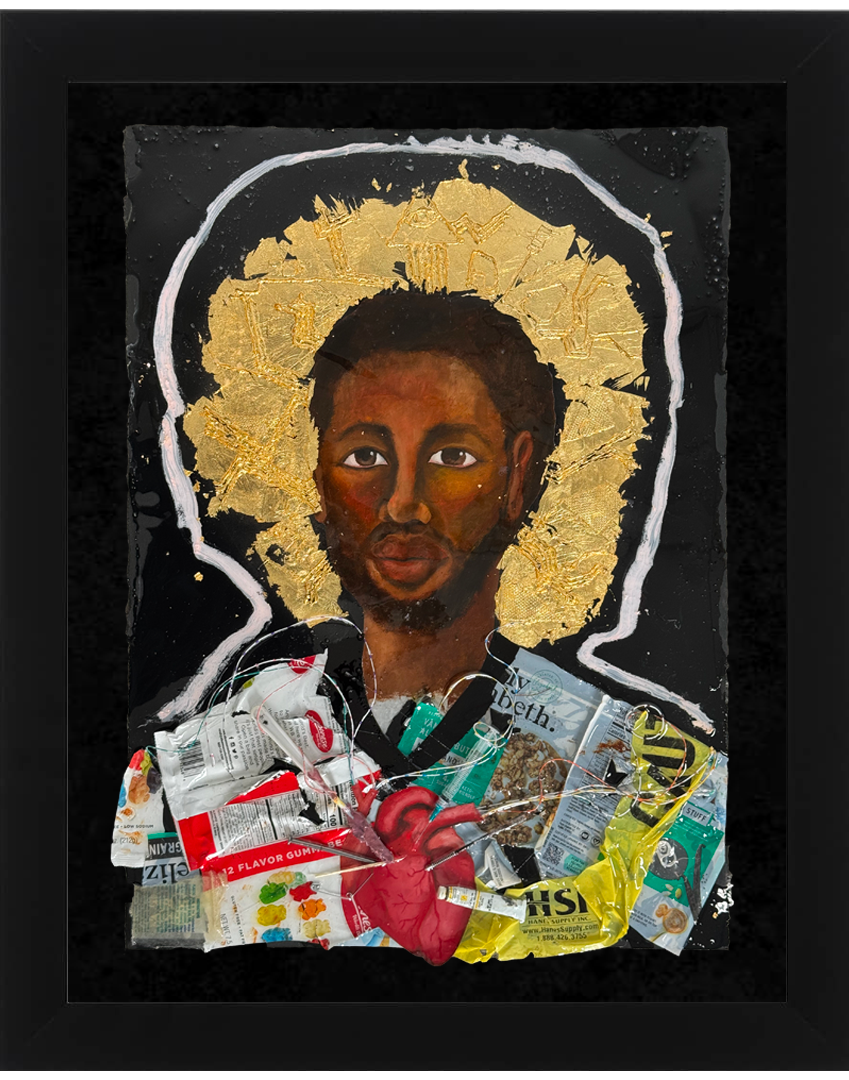 Image 1 of 6
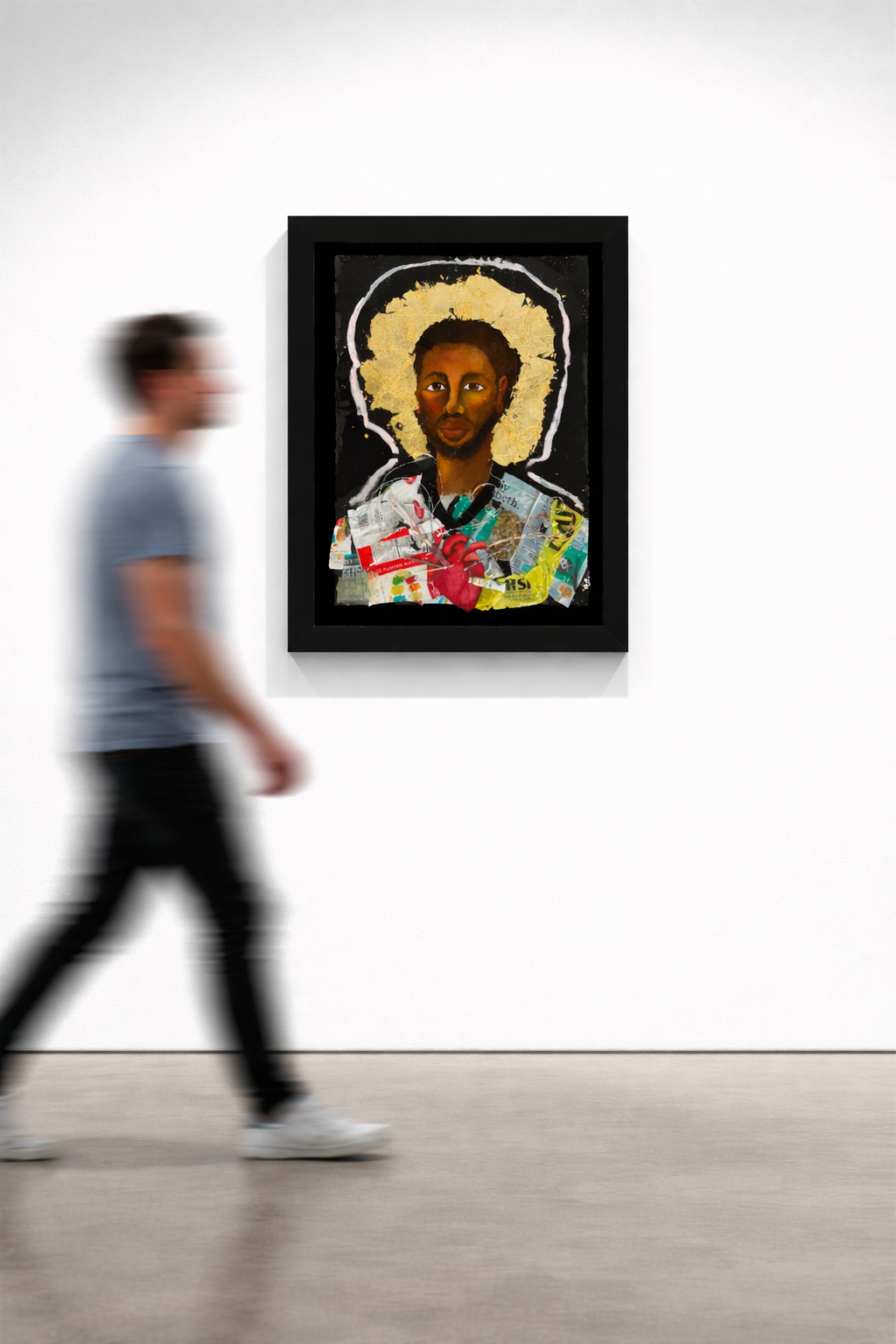 Image 2 of 6
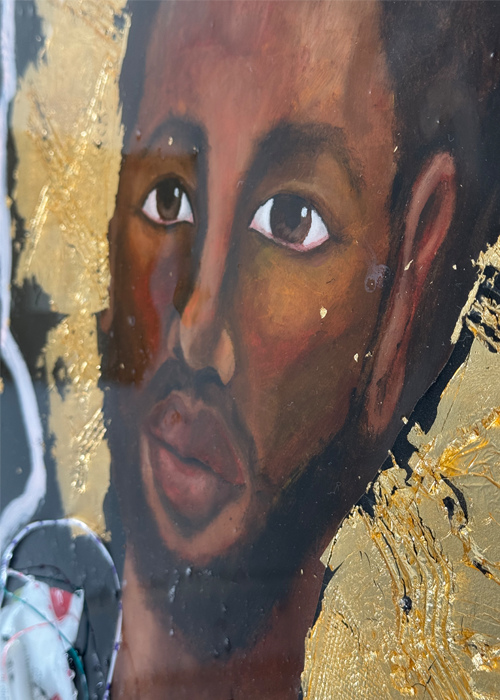 Image 3 of 6
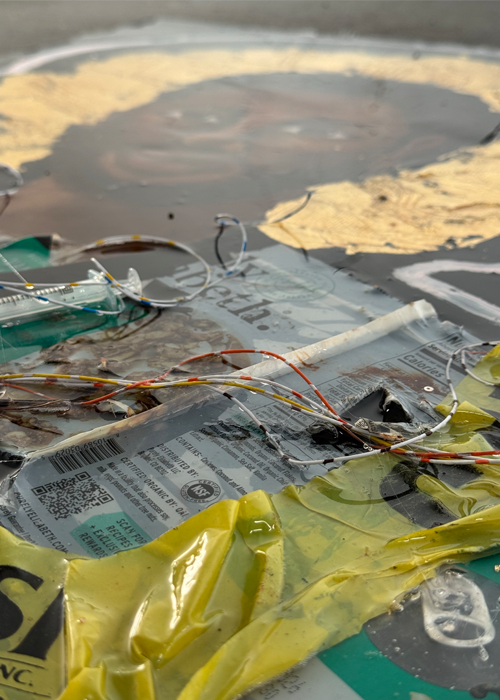 Image 4 of 6
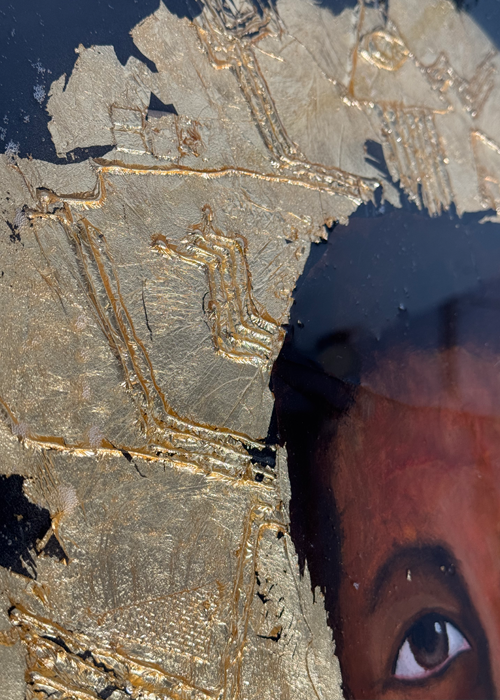 Image 5 of 6
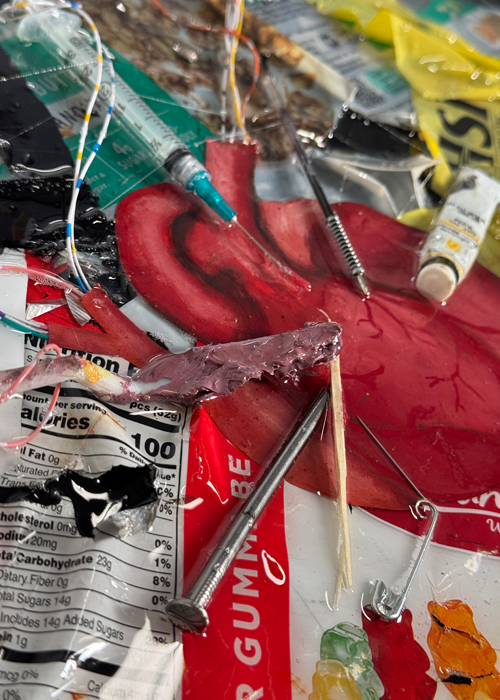 Image 6 of 6